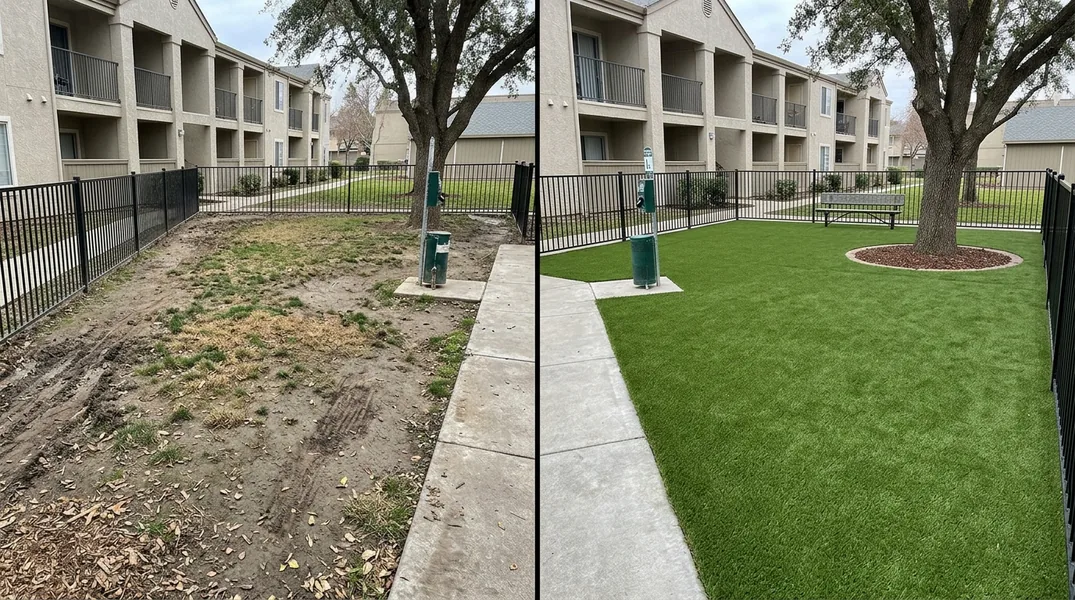
The Truth About Artificial Grass Temperature in Stockton
If you're considering Residential Artificial Grass Installation in Stockton, you've probably heard the question: does artificial grass get too hot? The short answer is yes, it can. But the full answer is more nuanced, and there are real solutions that make a difference.
During Stockton's hot summer months, artificial turf surface temperatures can reach 150 degrees Fahrenheit or higher when exposed to direct sunlight. That's significantly warmer than natural grass, which typically stays 20 to 30 degrees cooler because living grass transpires water and benefits from natural cooling processes. However, this doesn't mean artificial grass is unusable or uncomfortable for your family and pets. Understanding how heat builds up and knowing which cooling strategies work best allows you to enjoy all the benefits of artificial turf without the drawback of scorching surfaces.
How Artificial Turf Absorbs and Retains Heat
Artificial grass gets hot because it lacks the biological cooling mechanisms of natural lawn. Real grass absorbs water through its root system and releases it into the air through transpiration, a natural air-conditioning process. Synthetic turf has no roots, no soil moisture circulation, and no biological cooling cycle. Instead, the dark fibers absorb solar radiation throughout the day and convert that light energy into heat, which builds up in the backing and infill layers.
The infill material you choose plays a major role in how hot your turf becomes. Traditional infill options like silica sand and crumb rubber retain heat effectively, which is why older artificial grass installations often felt uncomfortably warm underfoot. The rubber crumb, in particular, absorbs and holds heat longer than other materials. On a 95-degree day in Stockton, turf with standard crumb rubber infill might reach 140 to 160 degrees Fahrenheit. The darker the turf color, the more solar radiation it absorbs, making this factor another consideration when selecting your artificial grass product.
Cooling Infill Options That Really Work
The good news is that modern cooling infill solutions have transformed the artificial grass landscape. Cooling infill products are specifically engineered to reduce surface temperature by 30 to 50 degrees Fahrenheit compared to standard crumb rubber. These materials work through different mechanisms, but all aim to either reflect heat rather than absorb it, or to allow better air circulation and evaporative cooling within the turf system.
Silica sand mixed with acrylic or polyurethane coatings can reduce heat absorption significantly. Another option is zeolite-based infill, a porous mineral that naturally reflects infrared radiation and allows moisture to move through the turf system. Some installers recommend a hybrid approach, combining cooling infill with reflective coatings applied to the turf fibers themselves. Recycled rubber alternatives treated with cooling compounds are also gaining popularity. When you're planning your Residential Artificial Grass Installation, discussing cooling infill options with your installer should be a priority. The investment in cooling technology typically adds 10 to 20 percent to your project cost, but the comfort and usability improvement is worth it, especially if you have children or pets who spend time on the lawn.
Practical Strategies to Keep Your Artificial Grass Cooler
Beyond choosing the right infill, several practical strategies can help manage turf temperature. Strategic shade is one of the most effective approaches. If your yard layout allows, positioning umbrellas, shade sails, or pergolas over high-traffic areas keeps the surface cooler during peak sun hours. Trees and shrubs also provide natural shade, and their presence can reduce surrounding turf temperature by 15 to 25 degrees. This is especially valuable if you have a Pet Turf & Dog Run Installation, where your pets spend extended time outdoors.
Water application is another practical cooling method. Lightly misting or watering your artificial grass on extremely hot days can temporarily reduce surface temperature by 20 to 40 degrees. Unlike natural grass, artificial turf doesn't absorb water into the soil, so the moisture sits on the surface and helps cool the fibers through evaporation. This technique is particularly useful during peak afternoon heat. Installing a simple irrigation timer or using a garden hose with a misting nozzle makes this process convenient. Light-colored turf varieties also absorb less heat than dark green options, so if you're flexible on aesthetics, considering a lighter shade can make a measurable difference in how your lawn feels underfoot.
Artificial Grass Heat Considerations for Specific Applications
Different uses of artificial grass have different heat tolerance requirements. For general Residential Artificial Grass Installation, occasional barefoot contact during peak heat is uncomfortable but not dangerous. However, if you have small children who play on the lawn regularly, or if you're installing Pool Surround Turf where people will be walking barefoot frequently, heat management becomes more critical. Pool surround applications benefit especially from cooling infill because users are already in a water-based mindset and expect cool surfaces underfoot.
For Putting Green Installation, surface temperature can actually affect ball roll and play consistency, so cooling solutions are worth considering if you're an avid golfer. Pet owners should also prioritize heat management. Dogs and cats are sensitive to hot surfaces, and prolonged exposure to 140-plus-degree turf can cause discomfort or even paw pad injuries. If you're installing turf specifically for your pets, investing in cooling infill and incorporating shaded areas is a smart choice for their comfort and safety.
Getting Professional Guidance on Turf Temperature in Stockton
Every property in Stockton is unique, and the best cooling strategy depends on your specific yard layout, sun exposure, intended use, and budget. A professional installer can assess your property's microclimate, recommend appropriate infill and turf varieties, and design a cooling strategy tailored to your needs. Stockton Turf Installation has years of experience helping homeowners navigate heat concerns and create comfortable, beautiful outdoor spaces that perform well even during peak summer temperatures.
The key takeaway is this: yes, artificial grass does get hot, but modern materials and techniques have made this a manageable challenge rather than a dealbreaker. By choosing cooling infill, incorporating shade elements, and understanding your specific use case, you can enjoy an artificial lawn that stays comfortable and functional year-round. Ready to explore your options? Contact Stockton Turf Installation at (209) 320-5483 to discuss cooling solutions and get a free estimate for your project.
Looking for a professional artificial grass installation company in Stockton? Stockton Turf Installation responds fast for all your artificial grass installation needs.
Get a Free Quote